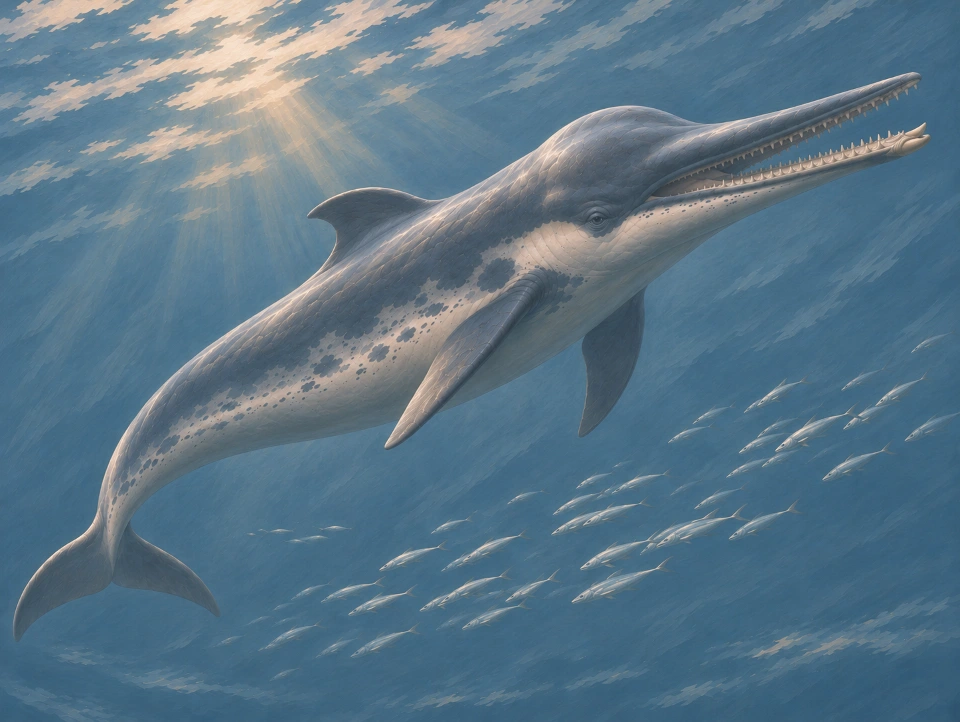
Oceanic dolphins
Delphinidae
Oceanic dolphins (Delphinidae), also known as true dolphins, are the largest and most diverse family of toothed whales (Odontoceti). They include bottlenose dolphins, common dolphins, pilot whales, and orcas, the latter being the largest living member of the family. Together with porpoises (Phocoenidae) and the beluga and narwhal (Monodontidae), they form the superfamily Delphinoidea.
Most oceanic dolphins have homodont dentition, consisting of numerous similarly shaped, conical teeth adapted for grasping prey rather than chewing. This contrasts with the typically flattened, spade-shaped teeth of porpoises. However, similar conical teeth occur in other living and extinct toothed whales, making isolated teeth difficult to assign confidently to Delphinidae. Skull morphology and the distinctive shapes of the ear bones (periotic and tympanic bulla) are generally more informative for identification.
The earliest confirmed oceanic dolphins date back to the Late Miocene, with the family diversifying considerably during the Pliocene. Many older fossil cetaceans resembling modern dolphins belong to other, now-extinct families rather than Delphinidae.