Tortoises
Testudinidae
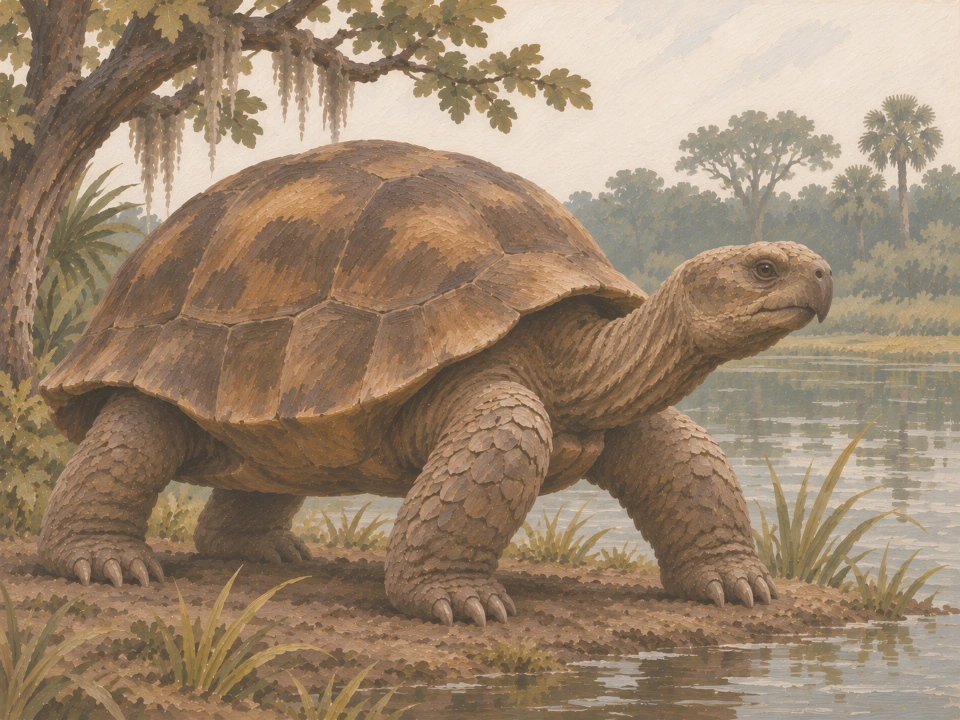
Tortoises (Testudinidae) are a family of predominantly terrestrial turtles belonging to the order Testudines. They include the modern gopher tortoises (Gopherus), Mediterranean tortoises (Testudo), and giant tortoises of the Galápagos Islands and Aldabra Atoll. The family also includes several extinct genera, such as Hesperotestudo, which contained large to giant tortoises that inhabited North America during the Pleistocene.
Most tortoises have a strongly domed upper shell (carapace), a broad lower shell (plastron), and short, robust limbs adapted for walking on land rather than swimming. Their shells consist of bony plates covered by keratinous scutes, whose boundaries leave characteristic grooves (sulci) on the underlying bone. The arrangement of these grooves, together with the shape, thickness, and proportions of individual shell bones, can help distinguish fossil tortoises from aquatic turtles.
Fossil tortoises are particularly well represented in Florida, where Pleistocene deposits contain remains of both the gopher tortoise (Gopherus polyphemus) and extinct giant tortoises such as Hesperotestudo crassiscutata. Isolated shell fragments are common finds, although identifying them to genus or species often requires distinctive anatomical features or more complete remains.
Within this group
In this collection 6 finds
Body parts
AlsoClaw core


