Bears
Ursidae
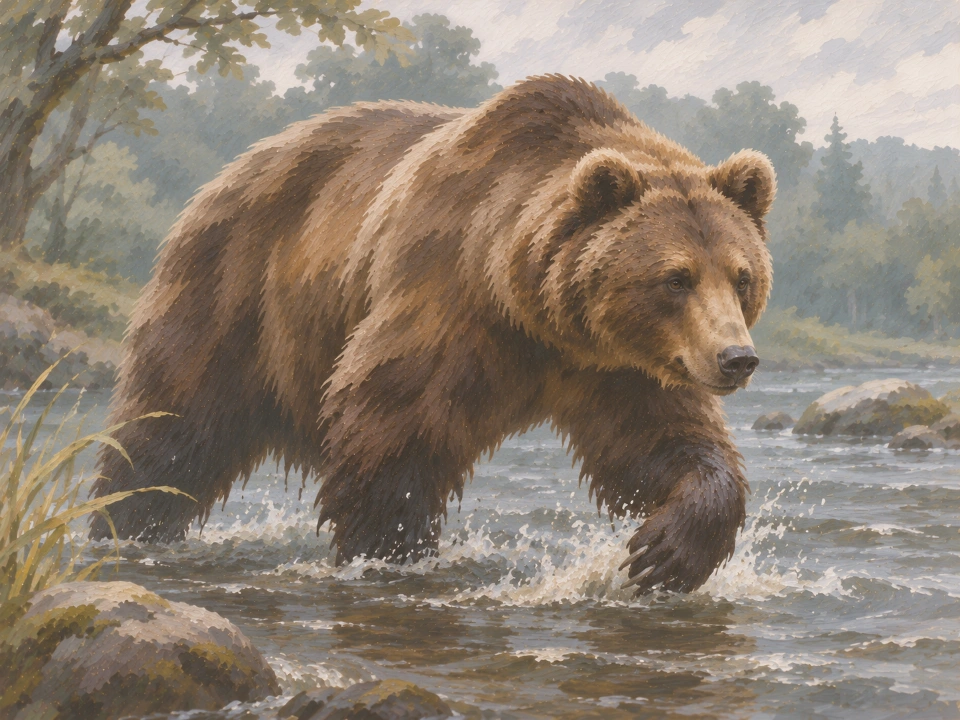
Bears, or ursids, are a family of carnivores that includes brown bears, polar bears, black bears, spectacled bears, giant pandas, and extinct relatives such as cave bears and short-faced bears. They belong to Caniformia (dog-like carnivorans), alongside dogs, mustelids, and seals. Bears typically have robust skeletons, five toes on each foot, and a plantigrade stance, meaning they walk with their entire foot resting on the ground.
Unlike many other carnivores, bears generally have broad bunodont molars, with rounded cusps adapted for crushing and grinding rather than cutting meat. Their carnassial teeth are also less specialized for slicing. The shape, size, and arrangement of their teeth are particularly useful for identifying fossil remains. European Pleistocene bears include the brown bear (Ursus arctos) and cave bears (Ursus spelaeus and relatives), the latter characterized by larger, more complex molars and a reduced number of premolars.